


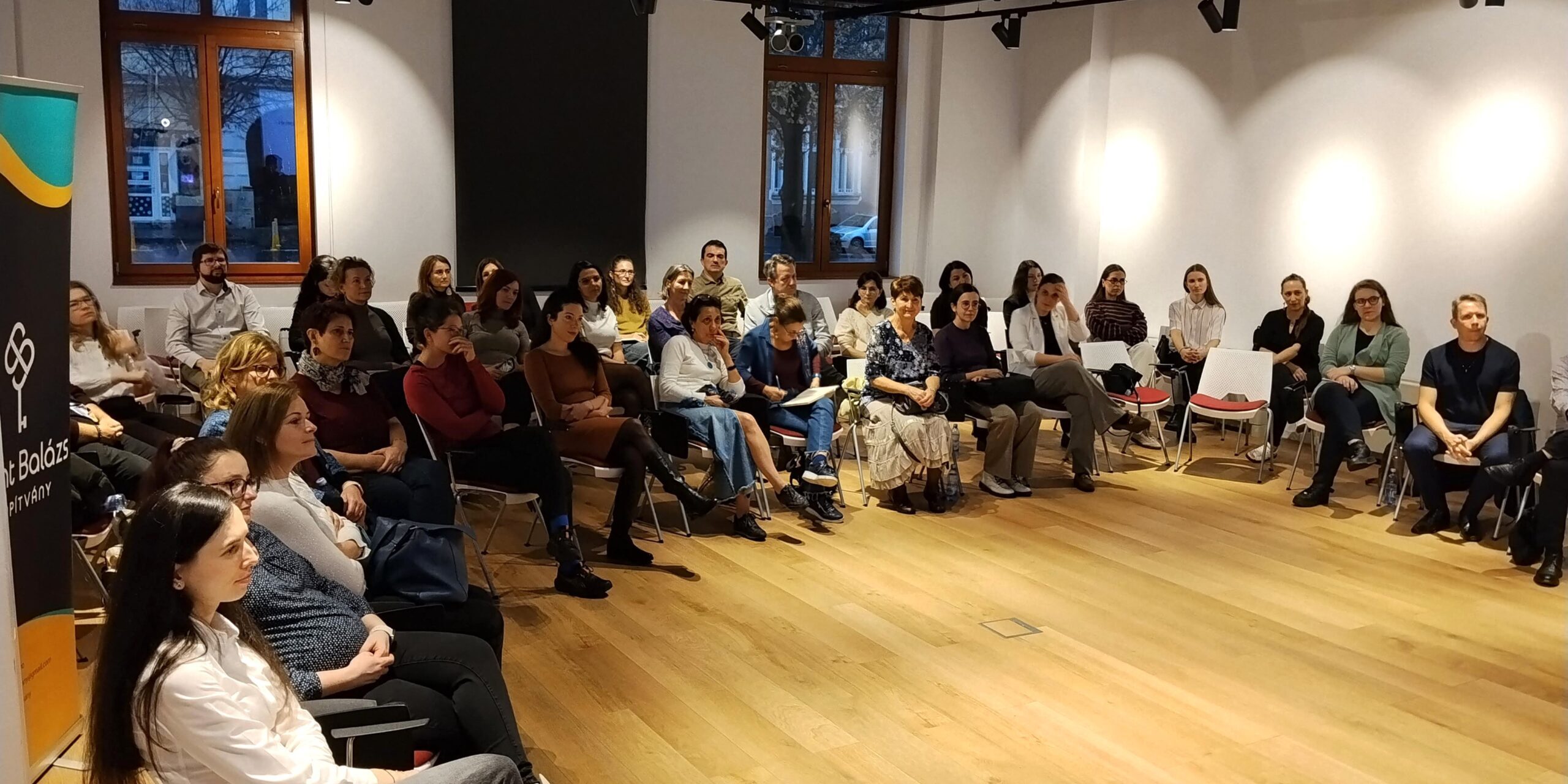
In healthcare, alongside professional expertise, the quality of human relationships, effective communication and the ability to manage challenging situations play an essential role. During a medical consultation, healthcare professionals encounter not only physical symptoms but also emotional burdens, motivational difficulties, mistrust and the challenges associated with lifestyle changes.
These everyday professional challenges were at the heart of our training programme, Low-Intensity Psychological Interventions in Lifestyle Counselling, which aimed to introduce practical communication and psychological tools that can be applied within the everyday framework of medical practice.
The participants came from a wide range of professional backgrounds, including general practitioners, family doctors, resident doctors, specialists and senior consultants in fields such as neurology, psychiatry, internal medicine, endocrinology, diabetology, infectious diseases, rheumatology, emergency medicine, paediatrics, dentistry and occupational medicine. The group also included clinical psychologists, psychologists, psychotherapists, social workers, medical assistants, dietitians, pharmacists, as well as medical students and university students from other disciplines.
One of the participants, Dr Ágnes Pál, a neurology resident and member of the Board of Trustees of the Szent Balázs Foundation, shared her personal experiences, reflections and insights in the following account.
A personal account by Dr Ágnes Pál:
“I was still a medical student when an experienced doctor I knew told me that if he could start all over again, he would attend communication training courses instead of every conference. What about all those conferences and professional development courses? No, he would attend communication training courses only. I was a little surprised. Until then, I had thought that professional knowledge was what I needed to actively acquire and continuously expand, because it would not simply find its way into my head on its own. Of course, that is still true. However, over time, I also realised that the skills required to work with people cannot be acquired solely through the passage of time and everyday experience. They involve our own emotions and deeply ingrained, often unconscious behavioural patterns. And changing those patterns takes more than a few new pieces of information. The path to change requires serious self-awareness, humility and a great deal of conscious practice.
Later, when I started working in the hospital, I often felt utterly helpless. It soon became clear that, for many patients, the underlying problem went far beyond their physical condition. Loneliness, unresolved emotional pain or other forms of chronic distress were often at the root of their difficulties. And no matter how much I wanted to help, there was very little I could do about these issues. As a treating physician, I cannot also be everyone’s psychotherapist, because I have neither the time, the framework nor the appropriate expertise for that. This often left me questioning what I could actually offer my patients.
Needless to say, my eyes lit up when I first heard about Low-Intensity Psychological Interventions: techniques specifically designed to be used during consultations, within the realistic boundaries of the doctor-patient relationship, to address various communication and lifestyle-related challenges. I had already had the opportunity to listen to Professor György Purebl on several occasions, and I had learned a great deal from those discussions every time. So there was no question about whether I should attend this training.
The workshops addressed everyday situations in medical practice that present challenges to all of us: What should we do when someone becomes angry or aggressive? How should we handle situations when we make a mistake? How can we help someone who is struggling to change their lifestyle? Someone who lacks motivation, is distrustful or dissatisfied? Someone who refuses to cooperate or rejects treatment? Finally, we discussed our own stress management and resilience, which are fundamental to handling difficult situations effectively.
The greatest strength of the training was its exceptionally practical approach. The trainers constantly placed us in realistic situations, and instead of providing ready-made answers, they encouraged us to think through what we would do and say in each situation. We recognised many misconceptions of our own, and it quickly became clear that the right approach is often the opposite of our instinctive reactions. Sometimes it took us several minutes just to work out what the appropriate response to a particular situation would be. And how far are we from being able to respond quickly and appropriately in a real-life situation? Only through extensive practice can we reshape our own behavioural patterns, but at least we have already taken the first steps on that journey. We would like to thank the organisers and trainers once again for bringing us one step closer to becoming professionals who can provide genuine help. This is particularly important here, where this approach is almost entirely absent from university education.”
This training reaffirmed that healing is about much more than applying professional knowledge and medical procedures. Attentiveness, empathy, self-awareness and mindful communication are equally essential elements of providing genuine support.
We would like to thank the speakers, trainers and all participants for their active involvement, openness and willingness to engage in meaningful discussions. Special thanks to all healthcare professionals who continue to carry this important mission forward every day: promoting human-centred, attentive and compassionate healthcare.